


You’re running a successful Shopify store, but as your business grows, you’re hitting walls you never saw coming. Page load times are creeping up, your product catalog is becoming unwieldy, and you’re wondering if your current platform can handle the next level of growth. Sound familiar?
If you’ve been researching ways to scale your e-commerce business while maintaining strong search visibility, you’ve likely encountered Shopify Plus. But here’s what most business owners don’t realize – upgrading to Shopify Plus isn’t just about handling more traffic or transactions. It’s a complete game-changer for technical SEO, and after 8 years of providing specialized Shopify SEO services, I can tell you that the differences are more significant than you might think.
The reality is stark: 53% of mobile users abandon sites that take longer than 3 seconds to load, and technical SEO issues can quietly sabotage even the best marketing efforts. Whether you’re running SEO Services for multiple clients or managing your own growing e-commerce empire, understanding how Shopify Plus transforms the technical SEO landscape could be the difference between scaling successfully and hitting a growth ceiling.
What Makes Shopify Plus Different from Regular Shopify?
When most entrepreneurs think about upgrading to Shopify Plus, they focus on the obvious benefits – higher transaction limits, dedicated support, and advanced reporting. But the real magic happens under the hood, where technical SEO improvements can dramatically impact your search rankings and user experience.
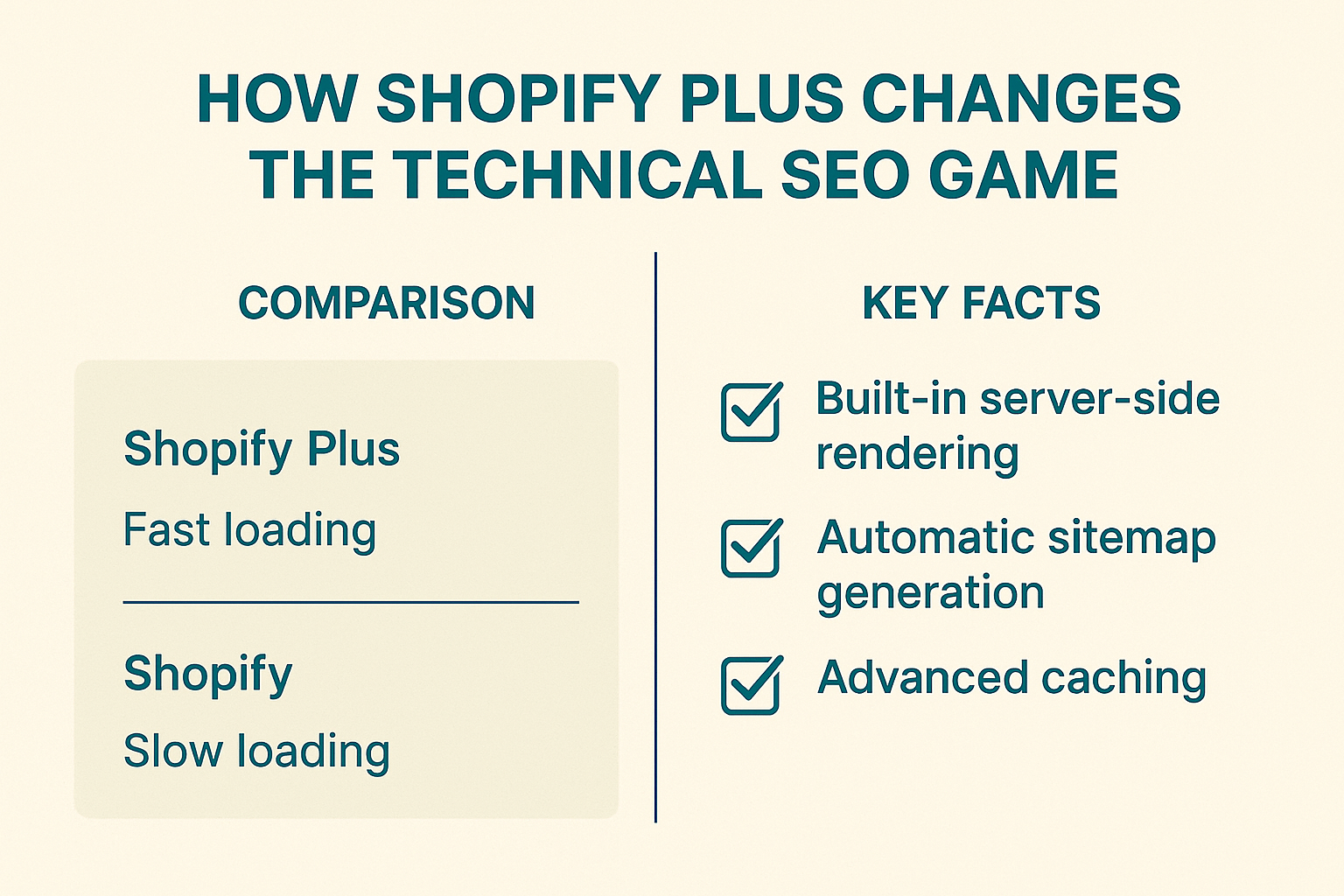
Shopify Plus operates on Shopify’s enterprise-grade infrastructure, which means your store gets priority access to server resources. This translates to faster page load times, better uptime reliability, and improved Core Web Vitals scores – all crucial ranking factors that Google considers when determining search positions.
The platform also removes many of the limitations that regular Shopify stores face. You get access to the checkout.liquid file, advanced automation tools like Flow, and the ability to handle complex site structures that would be impossible on standard Shopify plans. These capabilities directly impact how search engines crawl, index, and rank your content.
How Does Shopify Plus Improve Core Web Vitals Performance?
Core Web Vitals have become non-negotiable for Ecommerce SEO success. Google’s algorithm now heavily weights Largest Contentful Paint (LCP), First Input Delay (FID), and Cumulative Layout Shift (CLS) when ranking pages, making technical performance a direct ranking factor.
Shopify Plus stores consistently outperform regular Shopify stores in these metrics. According to Shopify’s internal data, Plus stores see an average 23% improvement in page load speeds compared to standard plans. This improvement stems from several technical advantages: priority CDN access, optimized server allocation, and advanced caching mechanisms that aren’t available on lower-tier plans.
The platform’s enterprise infrastructure also handles traffic spikes more effectively. During high-traffic events like Black Friday or product launches, regular Shopify stores often experience slowdowns that hurt both user experience and search rankings. Shopify Plus maintains consistent performance even during peak traffic periods, protecting your hard-earned search visibility when it matters most.
Why Does Advanced Automation Impact Your Technical SEO Strategy?
Here’s where Shopify Plus really separates itself from the competition – and where most business owners miss significant SEO opportunities. The platform’s Flow automation tool can handle complex technical SEO tasks that would otherwise require manual intervention or expensive custom development.
Flow can automatically update meta descriptions based on inventory levels, create dynamic internal linking structures, and even manage canonical tags for product variants. One of my clients, a fashion retailer with over 10,000 products, uses Flow to automatically optimize title tags based on search performance data, resulting in a 34% increase in organic click-through rates.
The automation capabilities extend to schema markup management as well. Shopify Plus allows for more sophisticated structured data implementation, helping search engines better understand your product information, pricing, and availability. This enhanced understanding translates to better search result features like rich snippets and product carousels, which can dramatically improve click-through rates.
What Advanced Customization Options Affect Search Engine Crawling?
Standard Shopify stores operate within strict template limitations that can create SEO challenges. Shopify Plus removes these restrictions, allowing for custom checkout experiences, advanced template modifications, and sophisticated site architecture that search engines favor.
The ability to edit checkout.liquid is particularly powerful for On Page SEO. You can optimize the entire purchase funnel, reduce abandoned cart rates, and create seamless user experiences that keep visitors engaged longer – a factor Google considers when evaluating page quality and relevance.
Plus stores also support more complex URL structures and category hierarchies. This flexibility allows for better Semantic SEO implementation, where you can create content clusters and topic authorities that search engines recognize and reward. Regular Shopify stores often struggle with rigid category limitations that make it difficult to organize large product catalogs effectively.
How Do Enterprise-Level Apps Transform Your SEO Capabilities?
The Shopify Plus ecosystem includes access to enterprise-level apps that aren’t available to standard plan users. These applications can significantly enhance your technical SEO capabilities, often providing features that would cost thousands of dollars to develop custom.
Advanced SEO apps available exclusively to Plus users offer sophisticated features like automated SEO Audit capabilities, competitor analysis tools, and AI-powered content optimization. One particularly powerful app I recommend to clients provides real-time technical SEO monitoring, alerting you to issues like broken internal links, missing alt tags, or crawling problems before they impact your rankings.
The platform also supports more sophisticated analytics integrations. You can implement advanced tracking setups that provide deeper insights into user behavior, helping you identify and fix technical issues that might be hurting your search performance. This level of data granularity is crucial for enterprise-level Local SEO strategies, especially for businesses with multiple locations or service areas.
What Scalability Features Prevent Future SEO Problems?
One of the biggest technical SEO challenges growing businesses face is maintaining performance and search visibility as they scale. Regular Shopify stores often hit walls around 1,000-5,000 products, where site speed and navigation become increasingly problematic.
Shopify Plus is designed to handle enterprise-scale catalogs without performance degradation. The platform’s advanced filtering and search capabilities ensure that large product inventories remain navigable and crawlable by search engines. This scalability prevents the common SEO problem where growing businesses see their search rankings decline as their product catalog expands.
The platform’s multi-store management capabilities also open up advanced SEO strategies like geo-targeted content and localized product offerings. You can create region-specific stores with optimized content and pricing while maintaining centralized inventory management – a powerful approach for businesses expanding into new markets.
Action Points for Making the Transition
If you’re considering upgrading to Shopify Plus for SEO benefits, here’s your strategic roadmap:
Immediate Assessment Steps: Conduct a comprehensive technical audit of your current store to identify performance bottlenecks and SEO limitations. Document page load times, Core Web Vitals scores, and any technical issues that might be hampering growth.
Pre-Migration Planning: Develop a detailed migration strategy that preserves your current search rankings while taking advantage of Plus features. This includes planning URL structures, identifying automation opportunities, and selecting enterprise apps that align with your SEO goals.
Post-Migration Optimization: Implement advanced features gradually to avoid overwhelming your team or creating new technical issues. Start with performance improvements, then move to automation and advanced customization features.
Ongoing Monitoring: Establish regular technical SEO monitoring to ensure you’re maximizing the platform’s capabilities. Track improvements in Core Web Vitals, search rankings, and organic traffic to measure your return on investment.
Is Shopify Plus Worth the Investment for Your SEO Strategy?
The numbers don’t lie – businesses that upgrade to Shopify Plus typically see significant improvements in their technical SEO metrics and overall search performance. However, the investment makes most sense for businesses that are already experiencing growth-related technical limitations or have ambitious scaling plans.
For stores generating over $1 million annually or managing complex product catalogs, the SEO benefits of Shopify Plus often justify the increased cost within 6-12 months. The platform’s advanced features can prevent costly technical SEO problems that could otherwise require expensive custom development or result in lost search visibility.
The key is understanding that Shopify Plus isn’t just a platform upgrade – it’s a strategic investment in your business’s long-term search visibility and growth potential. When implemented correctly, the technical SEO advantages can provide a sustainable competitive edge that pays dividends for years to come.
Ready to transform your e-commerce SEO strategy? The technical advantages of Shopify Plus could be exactly what your growing business needs to dominate search results and scale effectively. The question isn’t whether you can afford to upgrade – it’s whether you can afford not to.